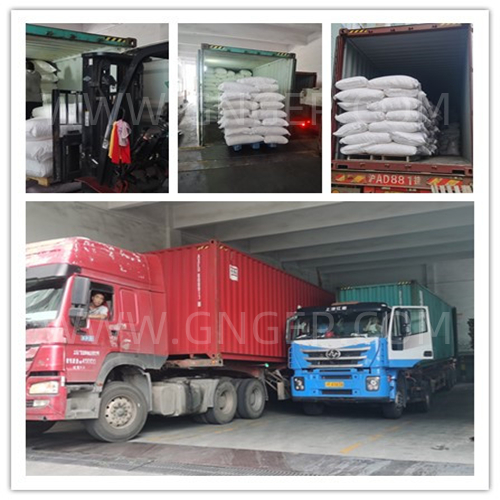
Today Hundreds cube meters of MBBR Media were delivered to Philippines.
Mbbr Media includes in k1 media,k3 meida,k5 media are a type of core material used in the fields of sewage, wastewater treatment, and biocatalysis. By providing microbial attachment carriers or immobilized enzymes, they enhance the degradation efficiency of pollutants and the stability of catalytic processes. The following is a comprehensive analysis of its core characteristics and applications:
1. Classification and Structure
According to material and form
Polypropylene based fillers: including semi soft fillers (injection molded "snowflake" structure), suspended ball fillers (double-layer polypropylene spheres, specific surface area ≥ 800m ²/m ³), and active biological fillers (hollow layered structure, simultaneous denitrification and organic matter removal).
Natural material fillers: such as volcanic rock fillers, containing minerals such as silicon and aluminum, with a porosity of 40%, suitable for microbial enrichment.
Elastic fiber filler: combining the advantages of soft and semi soft fillers, it is made of polyolefin, which is anti-aging and has variable voids.
Design by Function
Fixed bed flat plate packing: Enzyme is fixed by physical adsorption or chemical bonding to enhance catalytic efficiency and reusability.
Three dimensional composite filler: such as PP material double ring plastic ring structure, supporting anaerobic and aerobic bacteria symbiosis, enhancing denitrification effect.
2. Core technical characteristics
Physical performance
Specific surface area ≥ 800m ²/m ³, high porosity, excellent compressive strength.
Strong corrosion resistance, suitable for pH range of 3-12, and brittle temperature as low as -10 ℃.
Biological and Chemical Properties
Strong hydrophilicity, accelerates microbial biofilm formation (cycle can be shortened to 5-7 days).
Modular design facilitates replacement and reduces residual sludge by over 40% compared to traditional processes.
3. Application Fields
Wastewater treatment
Municipal sewage: used for equipment such as oxidation tanks and contact oxidation towers to treat domestic sewage and industrial wastewater (printing and dyeing, petrochemicals, food, etc.).
River management: Restoration of eutrophic water bodies through synchronous nitrification denitrification function.
Biocatalysis
The application of immobilized enzyme technology in industrial production reduces enzyme loss and costs.
Aquaculture
MBBR fillers can degrade ammonia nitrogen and nitrite in tilapia farming, supporting high-density farming mode.