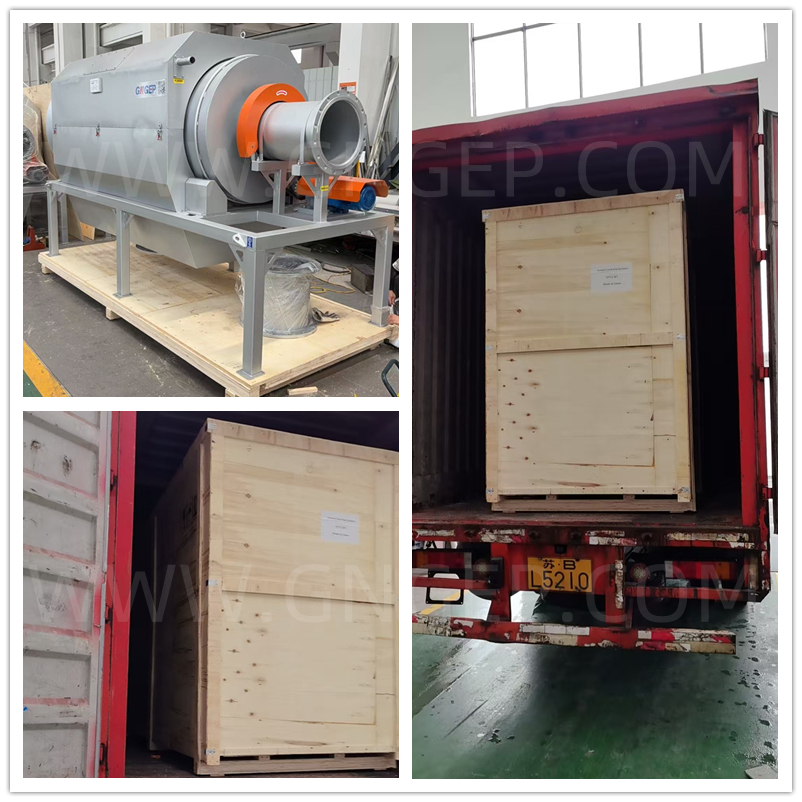
Today one set of Internal Feed Drum Filter Screen was Delivered to Australia.
Rotary drum filter screen is a solid-liquid separation device. Sewage enters from the inside of the drum and is filtered through a microporous screen (usually 60-200 mesh/square inch). The clean water is discharged through the gaps in the drum wall, and the suspended particles (≥ 0.2mm) intercepted are pushed by the slag guide screw to the slag outlet and discharged as the drum rotates. Compared to the external inlet type, it has a more uniform water distribution, stronger resistance to impact loads, and comes with a built-in backwash device to prevent blockage. It is widely used in aquaculture, papermaking, food processing, and urban sewage treatment.
Drum filter screen, also known as drum type microfilter or rotary microfilter, is different from external inlet type. Its sewage enters from the inside of the drum and is filtered from inside to outside through a sieve, which is more conducive to intercepting small particles and reducing the risk of blockage. This technology has been maturely applied in fields such as seawater aquaculture circulating water, papermaking white water recovery, and deep treatment of urban sewage.
Core structure and working principle
Main components: water inlet tank, stainless steel drum (including 60-200 mesh/square inch microporous screen), motor drive device, fully automatic backwash pump, buffer distribution box, slag guide screw and slag collection tank.
Operation process:
1. The sewage rises steadily to the filtered water level through the buffer distribution box.
2. Purified water enters the water storage box through the gaps in the sieve, and solids are trapped in the net.
When the filter screen accumulates and causes the water level to rise to the set high level, the liquid level system automatically starts the backwash pump and drum motor.
4. High pressure water fan-shaped spray cleans the filter screen, and the dirt falls into the slag collection tank and is discharged.
Rotary Drum Filter, with its four advantages of compact structure, high automation, low head loss, and strong corrosion resistance, has become a key equipment for SS and algae pretreatment in closed circulating water systems (such as factory aquaculture and paper white water reuse). When selecting, special attention should be paid to matching the processing capacity, mesh size (determining the retained particle size), material grade (especially for seawater conditions), and compatibility with the control system.