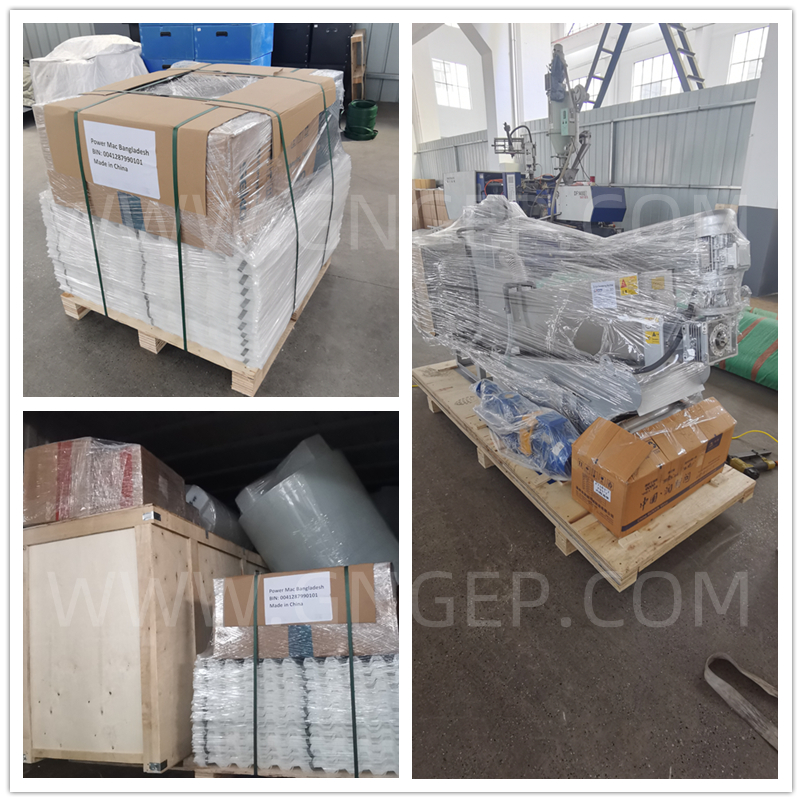
Today Sludge Dewatering Machine and Tube Settler Media were Delivered to Bangladesh.
The screw press sludge dewatering machine, as an efficient solid-liquid separation equipment, has been widely used in multiple fields due to its unique design and performance. Its core advantages are mainly reflected in the following aspects:
Efficient dewatering and low energy consumption: Adopting the principle of spiral extrusion, efficient dewatering of sludge is achieved in a small space, with higher dewatering efficiency than traditional equipment and lower energy consumption. For example, in the food processing industry, large amounts of sludge can be quickly processed, reducing storage and transportation costs and improving production efficiency.
Wide adaptability: It can handle sludge with high viscosity, high solid content, and complex components such as oil and fat in the food processing industry, and adapt to the treatment needs of sludge with different properties.
Environmental Protection and Automation: Low energy consumption and low noise during operation, in line with modern environmental protection concepts; Adopting PLC control system to achieve automated operation and remote monitoring, reducing manual intensity, and integrating into the automated production line stably and reliably.
Maintenance convenience: The structural design is reasonable, easy to disassemble and clean, reducing equipment maintenance costs and downtime.
The function and operation specifications of the reverse function of the screw press machine
The core role of reversal
Anti clogging and pre-treatment: When restarting after shutdown, reverse rotation can break up sludge clumps, ensuring that sludge enters the dewatering area evenly during subsequent forward rotation and improving dewatering efficiency.
Equipment cleaning and maintenance: Regular reversal can clean the sludge attached to the spiral blades and the inner wall of the cylinder, and use cleaning water to rinse difficult to clean parts, extending the service life of the equipment.